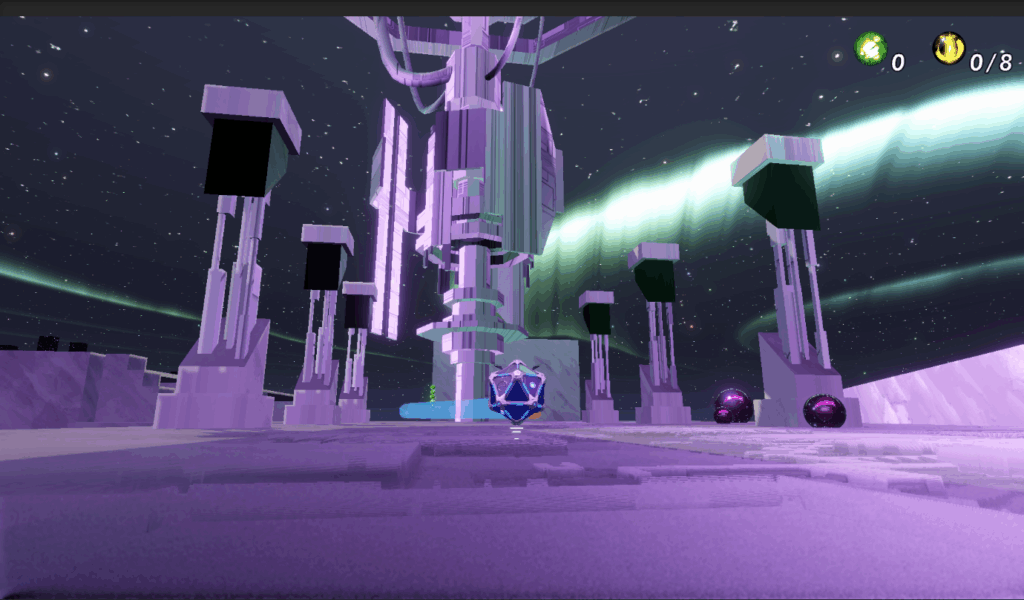
Poled Apart is a 3D cooperative platformer for two players. Combine your magnetic powers of attraction and repulsion to explore a mysterious world full of dangerous antimatter.
Genre: 3D third person, Co-op, platformer
Team Size: 5
Duration: 2 months
Poled Apart is a 3D cooperative platformer for two players. Combine your magnetic powers of attraction and repulsion to explore a mysterious world full of dangerous antimatter.
Both players are magnetic and can switch their polarity (charge) at any time. If both are charged the same, they will repel each other. If they are charged oppositely, they will attract each other.
(Apart from that, they can walk and jump.)
Gameplay implications
Players can use repulsion…
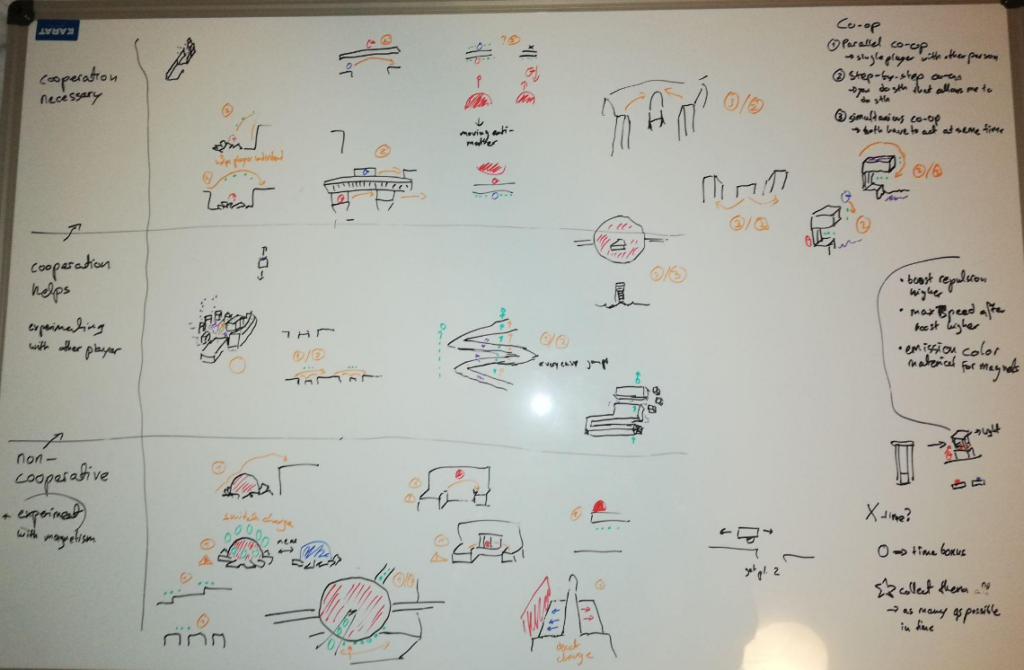
to boost each other over gaps which are too far away for a normal jump
to perform higher jumps
to accelerate when seperating
Players can use attraction…
to drag the other player up, e.g. out of a hole
to pull a jumping player to the next platform
to accelerate when together
to make one player walk at the ceilling
Tweaking & faking physics
The main goal was to create an impactful, thus strong, charge effect on the one hand. On the other hand, it should not feel annoying to move together, being constantly influenced by each other.
These two seemingly conflicting goals required a lot of iterations, testing and as well as faking the real life physics.
The player’s gravity, mass,max Speed values and animation curves of attraction and repulsion needed all to be harmonised. Since the effect of the magnetic force depends on the distance between both players and their current movement, the process got very complicated.
Puzzle and action elements
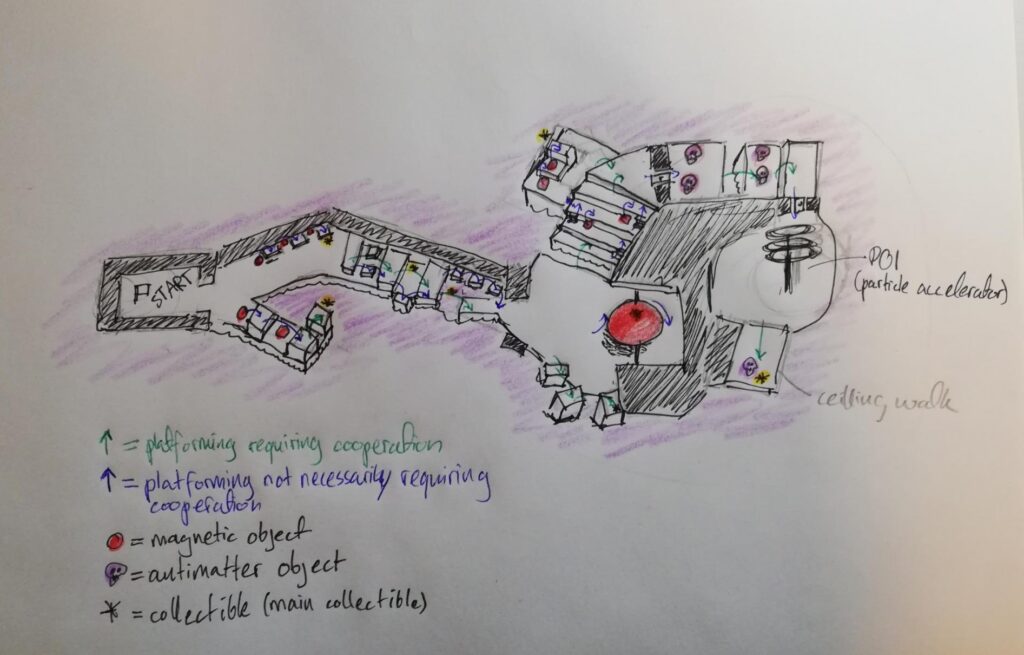
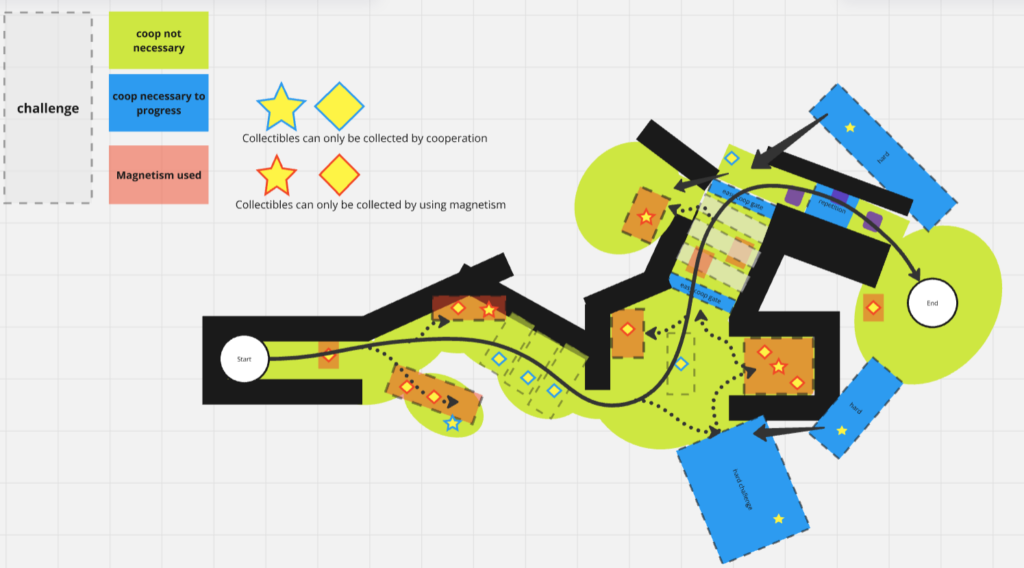
To create more variety in gameplay challenges, the charge mechanics is used with regard to objects to create puzzle and action challenges, such as charged platforms or elevators (movable by attraction and repulsion) or dangerous charged antimatter, which the player needs to dodge (and reacts dependent of the player’s charge).